How to Program a Garage Door Opener in the UAE (2026): BFT, Nice, FAAC, Marantec & LiftMaster Step by Step
2026 step-by-step guide to programming BFT, Nice, FAAC, Marantec and LiftMaster garage door remotes in the UAE, plus HomeLink pairing and how to wipe a lost remote.
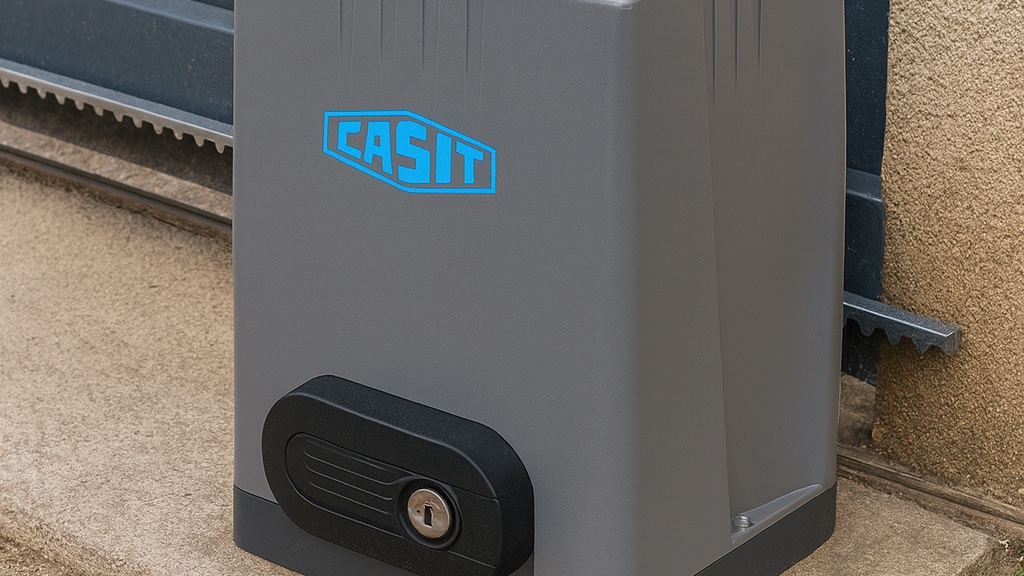
A garage remote that stops pairing is usually a five-minute fix — and a lost one is a security problem, not an inconvenience.
Every week our technicians across Dubai and Sharjah program remotes that died in a glovebox through a 48-degree summer, walked off with a departing tenant, or were never paired to the new family car.
The good news for 2026 — almost every opener installed in the UAE pairs the same basic way, and most of it you can do yourself with a ladder and a fresh battery.
How pairing actually works — rolling code
Your remote and the opener's receiver share a mathematical trick called rolling code. Every press generates a fresh code from a sequence with billions of possibilities, and the receiver only accepts codes it can predict from transmitters it has already enrolled.
That is why you cannot buy any remote and expect it to work — the receiver has to be told, once, to trust that specific transmitter. Fixed-code dip-switch systems survive on some 1990s-era doors, but everything the major brands have shipped in two decades rolls its codes.
Enrolment happens through a learn button. Nice calls it a memorisation button, Marantec a programming button, LiftMaster a learn button — same idea. Press it and the receiver listens for a new transmitter, usually for 10 to 30 seconds.
Press the remote button you want inside that window, and the receiver confirms with an LED flash, a click, or a blink of the courtesy light. That is the whole ceremony.
Every brand's procedure is the same three moves — wake the receiver, press the remote, wait for the confirmation. Only the button and the flash differ.
Programming a new remote, brand by brand
One honest caveat before the sequences. Each brand ships dozens of receiver and remote models, and exact timings differ. What follows is the family pattern covering most of what we see installed across the UAE — when your model differs, the receiver's manual settles it.
BFT (Mitto family)
Most BFT installations here run Mitto remotes with a Clonix receiver. The receiver route — press the receiver's button until its LED lights, then press the chosen button on the new remote.
Many Mitto remotes also enrol from a working remote — press the hidden button on the back of the old one (a paperclip on older models, the two outer buttons together on newer ones), then its normal button, then repeat the pair on the new remote while standing near the door.
Nice (Flor-s and Era One)
Nice receivers carry a small memorisation button and an LED. Press the button until the LED comes on, release, then press the remote button you want within about ten seconds — the LED confirms with a steady flash.
Era One and Flor-s remotes can also enrol next to a working remote, held almost touching, following the press-and-hold sequence from the manual.
FAAC (XT series)
FAAC's SLH system works on master and slave remotes. A master remote — the first one coded to the system — can enrol a new one directly, held head to head, by pressing its two buttons together until the LED flashes and then transferring to the new remote.
Where no master exists, or the system is plain rolling-code, the setup button on the receiver board does the job the standard way.
Marantec (Digital series)
Marantec drive heads carry the programming button on the motor unit itself, usually behind the light cover. Press it until the programming LED flashes, press the remote button, and the LED going steady or out confirms the pairing.
Marantec runs on 433 MHz or 868 MHz depending on the model — the new remote must match, and the frequency is printed on the back of the old one.
LiftMaster and Chamberlain
The learn button sits on the back or side of the motor head, near the antenna wire, coloured yellow, purple, red or green depending on generation.
Press and release it, then press the remote button within 30 seconds — the courtesy light blinks or the unit clicks twice to confirm. The colour matters when buying — it identifies the radio protocol, and a wrong-generation remote will never pair no matter how many times you try.
Pairing your car's HomeLink buttons
Most cars sold in the UAE with built-in garage buttons use HomeLink — the three buttons in the mirror or overhead console. On a rolling-code opener, pairing takes two steps.
First, teach HomeLink the remote — hold the car button and the working remote's button together, the remote a few centimetres from the console, until the car's indicator changes from slow to rapid flashing.
Second, enrol the car at the opener — press the opener's learn button, then return to the car and press the HomeLink button twice, sometimes three times, within the 30-second window. Skipping that second step is the most common reason a freshly programmed car button still does nothing.
Lost or stolen remote — wipe the memory
When a remote is lost, stolen with a car, or leaves with a tenant, changing nothing is the same as leaving a spare key in the street. Every receiver can be wiped. On LiftMaster, hold the learn button about six seconds until the LED goes out — every enrolled remote and keypad is erased.
BFT, Nice, FAAC and Marantec receivers have an equivalent full-erase sequence, usually a long hold on the memorisation or programming button. After the wipe, re-enrol the remotes you still hold, one by one.
Do it the same day the remote goes missing — a villa handover in Dubai should treat the garage remote exactly like the front-door key.
Why pairing fails
Flat or wrong battery
The most common fault we see is also the simplest. Most modern remotes take a CR2032 coin cell, many older ones a 12-volt A23, and UAE glovebox heat kills both faster than the packaging promises. Check polarity, and clean any white corrosion off the contacts — Gulf humidity gets inside remotes kept near the coast.
Wrong frequency or protocol
A remote can be the right brand and still the wrong radio. 433.92 MHz is the UAE norm for BFT, Nice and FAAC, some Marantec and FAAC systems run 868 MHz, and LiftMaster splits by learn-button colour.
The frequency is printed on the remote's back or inside the battery cover — match it before you buy, because no amount of programming crosses a frequency gap.
Receiver memory full
Receivers hold a fixed number of transmitters — commonly between 10 and 60 depending on the model. Shared shopfront doors and villas with years of accumulated remotes hit the ceiling, and the receiver silently refuses new enrolments. The fix is a full erase followed by re-enrolling only the remotes actually in use.
Radio interference
LED floodlights, cheap CCTV transmitters and reversing-camera kits can flood the 433 MHz band. The tell is a remote that works from one metre away but not from the driveway. Try pairing with the suspect device unplugged, and route the receiver's antenna wire so it hangs clear of the metal door.
When it needs a technician
If a fresh battery, the right frequency and a clean erase still leave the receiver deaf, the receiver board itself may have failed — that is a diagnosis job, not a programming job. The same applies when the opener answers the wall button but no remote at all.
And if the motor hums, stalls or trips the breaker, that has nothing to do with remotes — our garage door motor problems guide covers those symptoms.
This guide deliberately carries no prices — our garage door remote control price guide, publishing the same week, covers what replacements, copies and programming cost across the UAE in 2026.
And when a sequence refuses to take, the ALSARAY app books a free site visit in under a minute, with live technician tracking — our technicians program spare remotes during any visit.
Site check summary
Garage Doors UAE quote and safety notes
Before you book
Customer checklist
- Measure opening width, height, headroom, side room, garage depth, floor level, and power access.
- Confirm whether the quote includes panels, motor, tracks, springs, remotes, sensors, removal, and warranty.
- Check spring balance, cable condition, sensor reversal, bottom seal, and manual release before daily use.
- Send photos or video before booking so the team can identify unsafe spring, cable, or motor symptoms.
Common customer questions
What people ask before calling
How do I program a garage door remote without the old one?
You do not need the old remote — you need access to the receiver. Press the learn or memorisation button on the opener's motor head or receiver box, then press the new remote's button within the 10-to-30-second window and wait for the confirming flash or click. The old-remote cloning shortcuts on BFT, Nice and FAAC are conveniences, not requirements. If the receiver is sealed inside a shopfront housing or mounted out of reach, a technician does the enrolment in minutes.
What is the learn button on a garage door opener?
It is the button that tells the receiver to trust a new transmitter. LiftMaster colours it yellow, purple, red or green on the motor head; Nice calls it a memorisation button; Marantec hides its programming button behind the light cover. Press it and the receiver listens for roughly 10 to 30 seconds — any remote button pressed in that window gets enrolled. Holding it much longer usually erases every remote, so a short press is the rule.
How do I connect my car to my garage door without a remote?
On a rolling-code opener you cannot — HomeLink learns the radio signal from a working handheld remote first, then gets enrolled at the opener's learn button. If every remote is lost, the sequence is to enrol a new handheld remote at the receiver, teach HomeLink from it, then press the opener's learn button and the car button twice within 30 seconds. A technician can supply and enrol a matching remote in one visit if the receiver is out of reach.
Why is my garage door remote not working after I changed the battery?
Check the simple things in order — battery the right way round, the correct type (CR2032 on most modern remotes, a 12-volt A23 on many older ones), and contacts free of the white corrosion that UAE humidity breeds. A battery change never erases pairing on rolling-code systems, so if the remote still does nothing at close range, suspect the remote's board or the receiver rather than the programming.
How do I stop a lost or stolen garage remote from opening my door?
Erase the receiver's memory the same day. On LiftMaster, hold the learn button about six seconds until the LED goes out — all remotes and keypads are wiped. BFT, Nice, FAAC and Marantec receivers have an equivalent long-hold erase on the memorisation or programming button. Then re-enrol the remotes you still hold, one by one. If a car with a paired HomeLink was stolen, the same wipe locks it out too.
What frequency are garage door remotes in the UAE?
Most openers installed in the UAE run on 433.92 MHz — that covers the common BFT, Nice and FAAC systems and the LiftMaster models sold in this region. Some Marantec and FAAC installations use 868 MHz instead. The frequency is printed on the remote's back or inside the battery cover, and it must match exactly — a 315 MHz US-market remote will never pair with a 433 MHz receiver.
Consult on this system
Turn this guide into a confirmed price.
Send this topic to the engineering desk with your opening size, photos, or drawings - the reply is a real package price.
Or book in the app — free site visit
BAB ALSARAY — the UAE door company with its own app: book a free site visit in under a minute, with live technician tracking, for garage doors, rolling shutters, gate motors, and barriers.
Prefer to talk? Call or WhatsApp BAB ALSARAY: +971 4 234 4544 (04 234 4544).
Information on this page reviewed .